
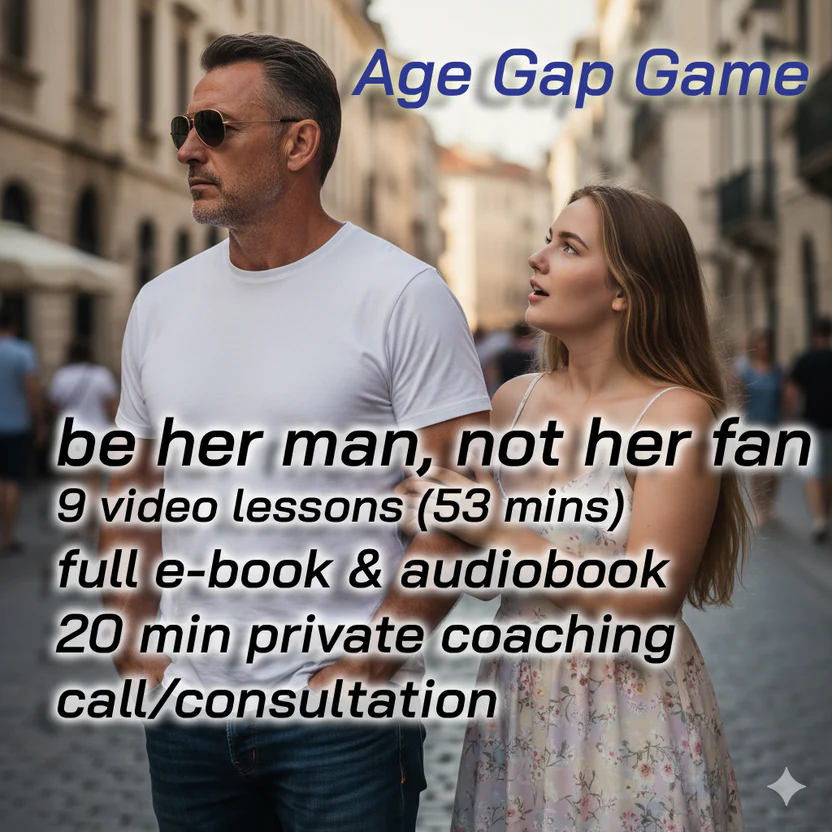
Jacob Abdo – Age gap Game Course
$67.00 Original price was: $67.00.$25.00Current price is: $25.00.
- 24/7 Contact Support & Telegram - Ecomkevin_1
- You Can Request Any Courses
- Original Courses HD Qualite and links updated
Guaranteed Safe Checkout


Jacob Abdo – Age Gap Game Course Review
Introduction
Building confidence in social interactions and improving communication skills has become a popular topic in the world of self-development. Many people are searching for structured programs that teach confidence, mindset, emotional intelligence, and relationship-building techniques. One course that has attracted attention in this niche is Jacob Abdo – Age Gap Game Course.
This review explores what the program focuses on, who it may be suitable for, its teaching style, strengths, possible limitations, and what learners can realistically expect. Instead of making exaggerated promises, this article provides an objective overview to help readers determine whether the course aligns with their personal development goals.
What Is Jacob Abdo – Age Gap Game Course?
Jacob Abdo – Age Gap Game Course is designed around the principles of confidence development, communication improvement, and social dynamics. Rather than relying solely on theory, the program emphasizes practical situations and real-world interactions that learners may encounter in everyday life.
The course discusses how confidence influences conversations, first impressions, body language, emotional control, and personal presentation. Students are encouraged to focus on self-improvement rather than shortcuts, making the material relevant to people who want to become more comfortable in social environments.
Unlike many generic confidence guides, the course attempts to organize different concepts into a structured learning experience that can be followed step by step.
Course Overview
The program is presented in a format that allows learners to gradually understand each concept before moving to more advanced topics.
Typical areas covered include:
- Building genuine confidence
- Developing stronger communication skills
- Understanding social psychology
- Reading social situations
- Improving conversation flow
- Personal presentation
- Managing anxiety
- Creating positive first impressions
- Emotional intelligence
- Long-term self-development habits
Each topic builds upon previous lessons, making it easier for beginners to understand the overall framework.
Learning Approach
One noticeable aspect of this course is its practical teaching style.
Instead of focusing entirely on abstract psychology, many lessons are built around realistic examples that demonstrate how communication works in everyday situations.
Students can observe:
- Common conversation mistakes
- Better communication techniques
- Practical confidence exercises
- Situational examples
- Mindset adjustments
- Behavioral improvements
This makes the learning process easier to understand compared to theory-heavy programs.
Confidence Development
Confidence is one of the primary themes throughout the course.
Rather than suggesting confidence appears instantly, the lessons explain how it develops through consistent habits, repeated social exposure, and self-awareness.
Topics often include:
- Handling rejection constructively
- Building resilience
- Improving posture
- Voice projection
- Maintaining eye contact
- Reducing overthinking
- Developing authentic confidence
These concepts are valuable beyond dating and can also improve networking, professional communication, and daily interactions.
Communication Skills
Effective communication plays a central role in every successful interaction.
The course discusses several important communication principles, including:
Active Listening
Instead of preparing responses while another person is speaking, learners are encouraged to fully engage with conversations.
Asking Better Questions
Open-ended questions naturally create longer and more engaging discussions.
Storytelling
Good storytelling can make conversations memorable while helping build stronger connections.
Emotional Awareness
Understanding emotional cues can improve both personal and professional relationships.
Social Dynamics
Another significant section focuses on understanding different social environments.
Examples include:
- Meeting new people
- Group conversations
- One-on-one interactions
- Networking events
- Casual settings
- Public environments
Rather than using identical approaches everywhere, learners are encouraged to adapt naturally to different situations.
Mindset Training
Many confidence issues begin internally rather than externally.
The course encourages students to work on:
- Limiting beliefs
- Negative self-talk
- Self-image
- Fear of judgment
- Emotional control
- Personal responsibility
Improving mindset often becomes the foundation for long-term behavioral changes.
Practical Exercises
One advantage of structured learning is the inclusion of exercises.
These activities may involve:
- Daily conversation challenges
- Confidence drills
- Reflection exercises
- Communication practice
- Observation assignments
- Personal improvement tracking
Consistent implementation helps reinforce the material instead of simply consuming information.
Strengths of the Course
Several aspects make this program appealing to learners interested in self-improvement.
Structured Learning
Lessons follow a logical progression from beginner concepts to more advanced communication techniques.
Practical Examples
Real-life situations help explain concepts more effectively than theory alone.
Beginner Friendly
Most lessons are explained in an accessible way without requiring previous experience.
Focus on Personal Growth
The emphasis remains on improving confidence, communication, and self-development rather than relying on scripted interactions.
Action-Oriented
Exercises encourage learners to practice what they learn instead of passively watching videos.
Potential Limitations
Like any educational program, there are factors prospective students should consider.
Results Depend on Practice
Watching lessons alone is unlikely to produce significant improvement without consistent application.
Individual Experiences Vary
People enter the course with different backgrounds, personalities, and goals, so outcomes may differ.
Not a Quick Fix
Confidence typically develops over time through repeated experience and self-reflection rather than instant transformation.
Who May Benefit Most?
This course may be suitable for individuals who want to:
- Improve communication skills
- Build social confidence
- Become more comfortable meeting new people
- Develop stronger conversational abilities
- Enhance personal presentation
- Strengthen emotional intelligence
- Work on personal development
People who are willing to practice consistently are generally more likely to benefit than those expecting immediate results.
Key Benefits
Some of the most notable advantages include:
- Organized learning structure
- Practical communication techniques
- Confidence-building exercises
- Social awareness development
- Improved conversational skills
- Better understanding of body language
- Mindset improvement strategies
- Real-world application
- Personal growth focus
- Easy-to-follow lessons
Pros and Cons
Pros
- Well-structured lessons
- Practical teaching style
- Easy to understand
- Suitable for beginners
- Encourages self-improvement
- Focus on communication
- Actionable exercises
- Real-world examples
Cons
- Requires consistent practice
- Results vary between individuals
- Some concepts may already be familiar to experienced learners
- Success depends on implementation rather than course completion alone
Overall Learning Experience
The overall learning experience is organized and approachable. Rather than overwhelming students with excessive theory, the course presents concepts in manageable sections that gradually build confidence and communication skills.
Learners who dedicate time to practicing the exercises may find the material more valuable than simply watching the lessons without implementation.
The strongest aspect of the program is its emphasis on developing authentic confidence instead of relying on memorized techniques.
Is It Worth Considering?
Whether this course is worthwhile depends on your goals.
If your objective is improving communication, becoming more confident, and understanding social interactions from a structured educational perspective, the course provides a framework that many learners may find useful.
However, success ultimately depends on personal effort, regular practice, and the willingness to apply the concepts consistently in real-life situations.
Final Verdict
Jacob Abdo – Age Gap Game Course presents a structured approach to confidence building, communication improvement, and social development. Its combination of mindset training, practical exercises, and real-world examples creates a learning experience that extends beyond simple theory.
Rather than promising unrealistic transformations, the course is best viewed as a resource for individuals committed to improving their interpersonal skills through steady practice and self-development. Those seeking a practical framework for becoming more confident communicators may find the material informative and actionable.
Frequently Asked Questions
What is Jacob Abdo – Age Gap Game Course about?
It is a personal development program centered on confidence, communication, social dynamics, and mindset improvement through structured lessons and practical exercises.
Is the course beginner friendly?
Yes. The material is organized in a way that makes it accessible for people with little or no prior experience in confidence or communication training.
Does the course focus only on dating?
No. Many concepts, such as confidence, emotional intelligence, active listening, and effective communication, are broadly applicable to everyday social and professional interactions.
Can results vary?
Yes. Outcomes depend on individual effort, consistent practice, and how effectively the lessons are applied in real-life situations.
Who should consider this course?
Individuals interested in personal growth, stronger communication skills, improved confidence, and a better understanding of social interactions may find it valuable.
