
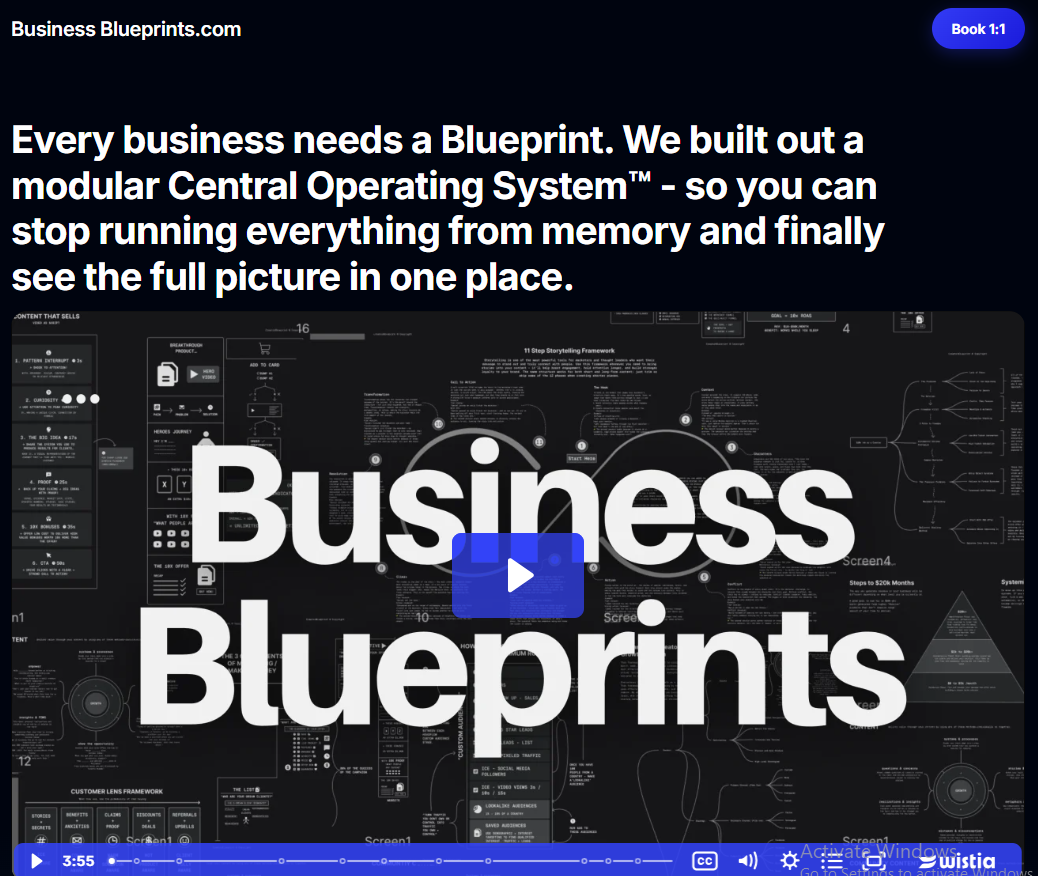
Business Blueprints: Complete Guide to Building, Scaling & Growing a Successful Business
$147.00 Original price was: $147.00.$22.00Current price is: $22.00.
- 24/7 Contact Support & Telegram - Ecomkevin_1
- You Can Request Any Courses
- Original Courses HD Qualite and links updated
Guaranteed Safe Checkout


Business Blueprints: The Complete Guide to Building, Scaling, and Growing a Successful Business
Building a successful business requires far more than having a great idea. Every thriving company follows a structured process that transforms concepts into profitable, sustainable organizations. This structured approach is often referred to as Business Blueprints—a complete framework that helps entrepreneurs create systems, define goals, improve operations, and achieve long-term growth.
Whether you’re launching your first startup, managing a small business, or expanding an established company, having a well-designed blueprint eliminates guesswork and provides a clear roadmap for success.
This comprehensive guide explores the essential components of Business Blueprints, explains why they matter, and demonstrates how entrepreneurs can use proven strategies to build businesses that grow consistently and efficiently.
What Are Business Blueprints?
Business Blueprints are strategic frameworks that outline every important aspect of building and operating a successful company. Instead of relying on trial and error, entrepreneurs use these structured plans to organize their vision into actionable steps.
A complete blueprint typically includes:
- Business strategy
- Market positioning
- Customer research
- Revenue model
- Marketing plan
- Sales process
- Operations
- Financial planning
- Team development
- Growth strategies
- Performance measurement
Rather than focusing on only one department, Business Blueprints connect every part of a business into one organized system.
Why Every Business Needs a Blueprint
Many businesses struggle because they operate without a clear direction. Decisions become reactive instead of strategic.
A structured blueprint provides several advantages:
Clear Business Direction
A roadmap helps owners understand exactly where they want the business to go and how they plan to get there.
Better Decision Making
Every decision becomes easier when measured against predefined goals and strategies.
Efficient Resource Management
Time, money, and talent are invested where they produce the highest return.
Improved Team Alignment
Employees understand company objectives and work toward shared outcomes.
Consistent Growth
Businesses become less dependent on luck and more dependent on repeatable systems.
Core Components of Business Blueprints
Creating an effective blueprint involves multiple interconnected elements.
Vision and Mission
Every successful company begins with a clear purpose.
The vision defines where the business wants to be in the future.
The mission explains how it plans to achieve that vision while serving customers.
Business Goals
Successful organizations establish measurable objectives.
Examples include:
- Revenue growth
- Customer acquisition
- Brand awareness
- Product expansion
- Market share
- Profit margins
- Customer retention
Goals should be realistic, measurable, and time-based.
Market Research
Understanding the market is essential.
Research should identify:
- Customer demographics
- Buying behavior
- Industry trends
- Competitor strengths
- Customer pain points
- Market opportunities
Accurate research reduces business risks and improves strategic planning.
Customer Avatar
Knowing your ideal customer improves every marketing effort.
A customer profile should include:
- Age
- Occupation
- Interests
- Income level
- Challenges
- Buying motivations
- Preferred communication channels
Businesses that understand their audience create stronger products and more effective marketing campaigns.
Creating a Strong Business Strategy
Strategy is the foundation of every successful company.
A complete strategy answers questions such as:
- What problem does the business solve?
- Why should customers choose this company?
- What makes the business unique?
- How will growth occur?
- Which markets will be targeted?
Strong strategies provide focus while avoiding unnecessary distractions.
Building an Effective Revenue Model
Revenue generation is one of the most important sections of Business Blueprints.
Common business models include:
Product Sales
Selling physical or digital products directly to consumers.
Service-Based Model
Providing expertise through consulting, coaching, or professional services.
Subscription Model
Generating recurring monthly or annual income.
Membership Programs
Offering exclusive resources for ongoing payments.
Licensing
Allowing others to use intellectual property for licensing fees.
Diversifying revenue streams often increases long-term stability.
Marketing Strategies That Drive Growth
Marketing is responsible for attracting potential customers.
An effective marketing strategy combines multiple channels.
Content Marketing
Publishing valuable articles, videos, podcasts, and guides helps establish authority while improving organic search rankings.
Search Engine Optimization
SEO improves website visibility by targeting relevant keywords and creating valuable content.
Important SEO practices include:
- High-quality content
- Internal linking
- Optimized headings
- Fast website speed
- Mobile responsiveness
- User-friendly navigation
Email Marketing
Email remains one of the highest-converting marketing channels.
Businesses can nurture leads by sending:
- Educational newsletters
- Promotions
- Product updates
- Customer success stories
- Personalized recommendations
Social Media Marketing
Social platforms allow brands to engage directly with audiences while building trust and awareness.
Consistency is more important than frequency.
Sales Systems That Convert
Generating leads is only half the process.
A successful sales system includes:
- Lead generation
- Lead qualification
- Customer education
- Objection handling
- Follow-up
- Closing
- Customer onboarding
Standardized sales processes improve conversion rates and customer satisfaction.
Operations and Workflow
Efficient businesses rely on documented systems.
Operational processes should cover:
- Daily workflows
- Customer support
- Project management
- Communication
- Inventory
- Quality control
- Reporting
Standard operating procedures reduce errors while improving scalability.
Financial Planning
Financial management determines long-term sustainability.
Business Blueprints should include:
Budget Planning
Allocate funds wisely across operations, marketing, staffing, and product development.
Cash Flow Management
Monitor incoming and outgoing funds regularly.
Positive cash flow keeps businesses healthy.
Profit Analysis
Understanding profit margins helps identify opportunities for improvement.
Emergency Reserves
Financial cushions protect businesses during unexpected challenges.
Team Development
As businesses grow, people become one of their greatest assets.
Successful organizations focus on:
- Hiring qualified professionals
- Employee training
- Leadership development
- Performance reviews
- Workplace culture
- Clear communication
Strong teams execute business strategies more effectively.
Technology and Automation
Modern businesses benefit greatly from automation.
Common automation tools help with:
- Customer relationship management
- Email marketing
- Scheduling
- Accounting
- Project management
- Customer support
- Analytics
Automation reduces repetitive tasks and increases productivity.
Measuring Business Performance
Tracking performance ensures continuous improvement.
Important metrics include:
- Revenue
- Gross profit
- Net profit
- Customer acquisition cost
- Customer lifetime value
- Conversion rate
- Website traffic
- Customer retention
- Sales growth
- Return on investment
Regular analysis helps identify both strengths and weaknesses.
Scaling a Business Successfully
Growth requires more than increasing sales.
Successful scaling includes:
Standardized Systems
Documented processes make expansion easier.
Delegation
Business owners should focus on strategy while teams handle execution.
Strong Leadership
Leaders create vision while maintaining accountability.
Customer Experience
Maintaining quality during expansion builds long-term loyalty.
Common Mistakes Businesses Should Avoid
Many entrepreneurs experience setbacks due to avoidable errors.
Common mistakes include:
- Lack of planning
- Ignoring customer feedback
- Poor financial management
- Weak marketing
- Inconsistent branding
- Hiring too quickly
- Failure to document processes
- Overcomplicating operations
Recognizing these issues early improves business performance.
Benefits of Following Structured Business Blueprints
Businesses that operate with organized frameworks often experience:
- Faster decision-making
- Higher efficiency
- Better profitability
- Stronger customer relationships
- Improved teamwork
- Sustainable growth
- Reduced operational risks
- Greater adaptability
- Clear long-term direction
These advantages help organizations remain competitive in changing markets.
Future Trends in Business Strategy
Business environments continue evolving rapidly.
Emerging trends include:
- Artificial intelligence integration
- Automation across departments
- Data-driven decision making
- Personalized customer experiences
- Remote workforce management
- Digital transformation
- Sustainability initiatives
- Cloud-based collaboration
- Predictive analytics
- Customer-centric innovation
Businesses that embrace these trends position themselves for long-term success.
How to Build Your Own Business Blueprint
Creating an effective framework doesn’t require unnecessary complexity.
Start by following these steps:
- Define your vision and mission.
- Research your target market thoroughly.
- Identify your ideal customer.
- Create a clear value proposition.
- Develop your revenue strategy.
- Build marketing and sales systems.
- Document operational processes.
- Establish financial goals.
- Track meaningful performance metrics.
- Continuously improve based on data and customer feedback.
Consistent execution is often more valuable than having the perfect plan.
Final Thoughts
Business success rarely happens by accident. Behind every thriving organization is a carefully designed system that guides daily decisions, supports long-term growth, and keeps every department aligned with common objectives. Business Blueprints provide that structure by combining strategy, marketing, operations, finance, leadership, and performance tracking into one cohesive framework.
Whether you are launching a new venture or improving an existing business, investing time in creating a detailed blueprint can lead to greater efficiency, stronger customer relationships, improved profitability, and sustainable expansion. The most successful entrepreneurs understand that growth comes from planning, disciplined execution, and continuous improvement. By implementing a comprehensive business blueprint, you create a solid foundation that allows your business to adapt, innovate, and succeed in an increasingly competitive marketplace.
